

Buildings age. Concrete carbonates, steel corrodes, waterproofing fails and loads change as owners add floors, tanks or machines. A structural audit is a systematic check by a qualified engineer to find out whether a building is safe and what repairs it needs before small problems become dangerous.
1. When should you get an audit?
- The building is more than 25–30 years old, or has never been checked.
- Wide or growing cracks, spalling concrete, exposed or rusted reinforcement.
- Persistent leakage, dampness or sagging slabs and beams.
- Before adding floors, heavy equipment, rooftop tanks or solar structures.
- Before buying or leasing an older property, or when required by local authorities.
2. What the audit includes
The engineer reviews available drawings, inspects every floor visually, maps cracks and distress, and checks for changes from the original design. Based on this, non-destructive tests (NDT) are planned.
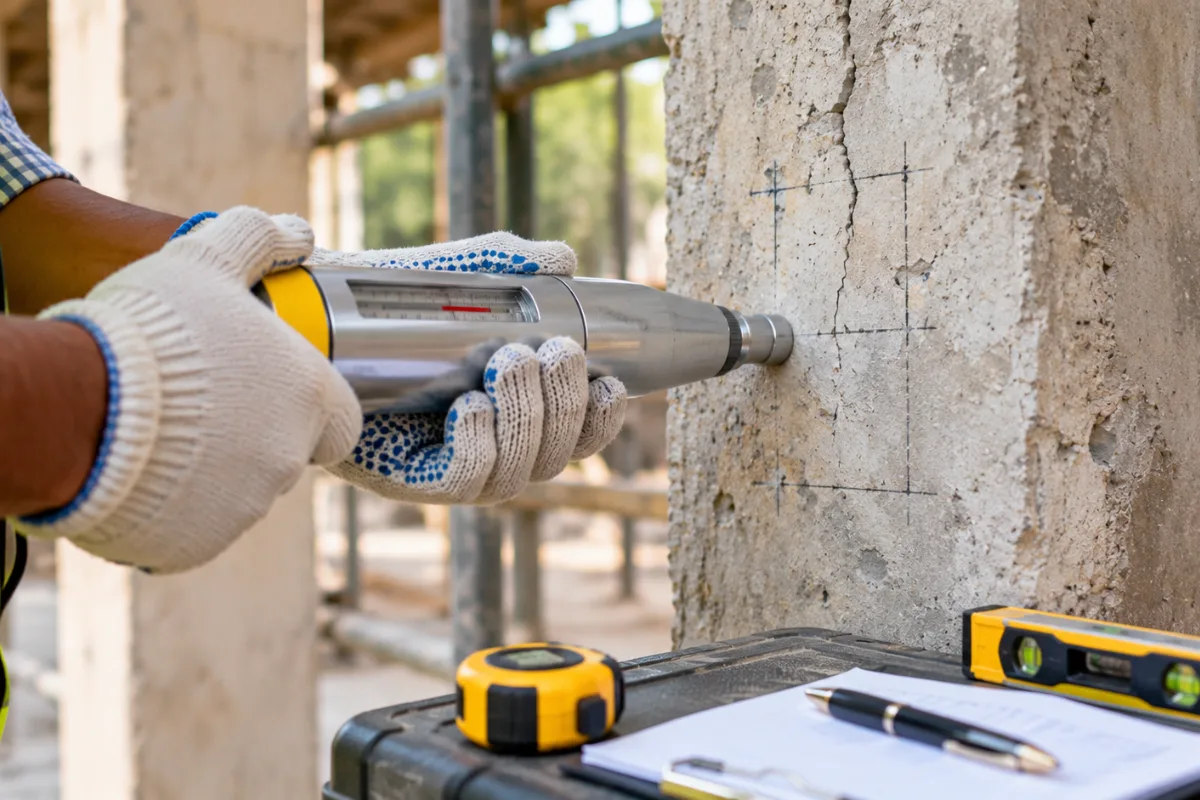
3. Common tests
- Rebound hammer: surface hardness as an indicator of concrete quality.
- Ultrasonic pulse velocity: uniformity and internal voids.
- Core cutting: direct compressive strength from extracted samples.
- Carbonation and chloride tests: risk of reinforcement corrosion.
- Half-cell potential and cover meter: corrosion activity and concrete cover.
Tests are interpreted together; no single test gives the full picture.
4. The audit report
A good report classifies the building condition, explains findings with photographs and test results, and recommends repairs with priorities — immediate, short term and long term. It may also recommend load restrictions or monitoring.
5. Repairs and retrofitting
Typical measures include crack repair, corrosion treatment, jacketing of columns and beams, waterproofing and drainage improvement. Quality of repair materials and workmanship is critical. Related reading: soil testing and geotechnical investigation and retaining wall design. For property checks before purchase, see the commercial property due diligence checklist, and contact ATTPL to discuss an audit.
Frequently asked questions
How long does a structural audit take?
For a typical mid-size building, inspection and testing can take a few days to a few weeks, depending on size and tests required.
Is NDT testing damaging to the building?
Most NDT tests are non-destructive. Core cutting removes small samples, which are repaired afterwards.
Who can carry out a structural audit?
A qualified and experienced structural engineer or a recognised structural consultancy.
This article is general technical information. Every structure is different; consult a qualified structural engineer before taking decisions.
Related reading: Repair work on older buildings often needs safe access: scaffolding safety checklist.



Pingback: Building Cracks: Causes and Repair Guide | ATTPL Infra