
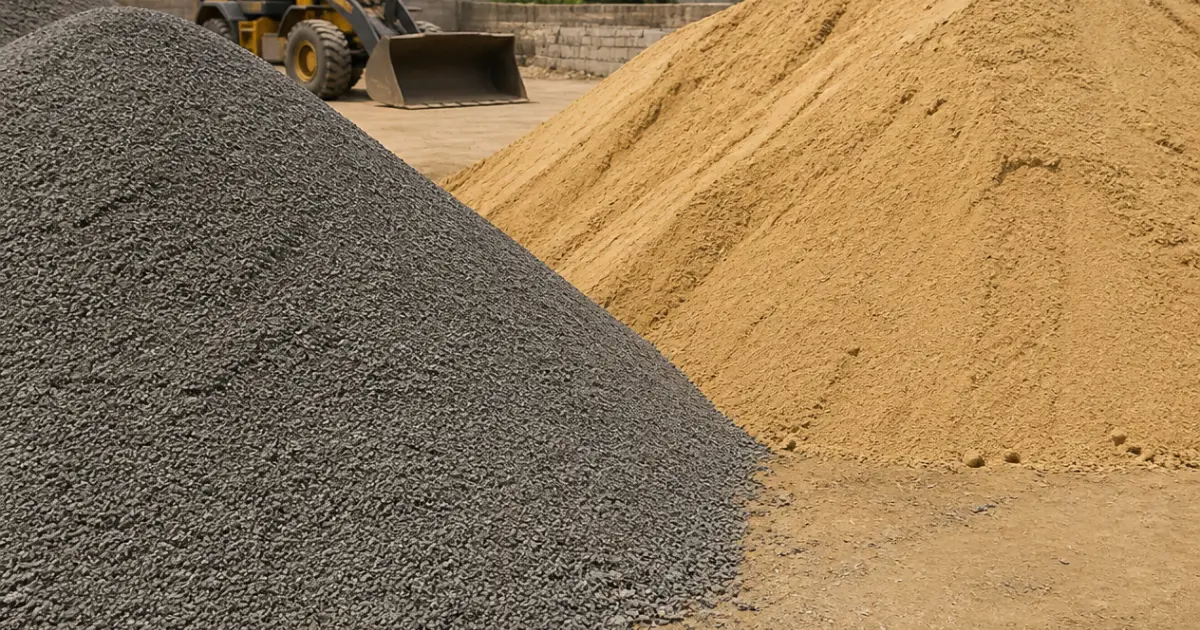
Sand makes up a large part of concrete and mortar, yet it is often the least checked material on site. With restrictions on river sand mining, manufactured sand (M-Sand) is now widely used. Understanding both helps builders get consistent, durable work.
1. River sand
Natural river sand has rounded particles that make mixes easy to work. Its quality varies with source, and it can contain silt, clay, organic matter or shells. Supply depends on mining rules and seasonal restrictions.
2. Manufactured sand
M-Sand is made by crushing hard stone and grading the particles, sometimes washing out excess fines. Good M-Sand has consistent grading and no organic impurities. Separate grades are often sold for concrete and for plastering. Our ATTPL Mining and Minerals site covers stone and mineral products.

3. Quality checks at site
- Silt content check using the simple field test
- Visual check for clay lumps, organic matter and oversize stones
- Grading or sieve analysis from the supplier, with periodic lab tests
- Moisture content, because it affects the water-cement ratio
4. Using sand correctly
Concrete mixes should be designed for the actual sand in use, as covered in the concrete quality control checklist. For plaster, finer graded sand reduces cracking; see the plastering guide. Store sand on a hard base, away from soil and debris.
5. How to accept a sand delivery
- Check the invoice, transport permit and vehicle number
- Measure the truck body and estimate quantity before unloading
- Take a sample and do a quick silt test
- Look for clay lumps, roots, plastic or oversized stones
- Compare colour and texture with the approved sample
- Reject or segregate material that does not meet requirements
- Record the delivery in the materials register
Keep an approved sample in a labelled jar at site so every new delivery can be compared quickly. Consistent sand makes concrete and plaster easier to control.
6. Buying sand responsibly
Buy from legal, licensed sources with proper invoices and transport documents. Check quantity in the truck before unloading. ATTPL Material Infra supplies construction materials, and cement choices are covered in our cement types guide. For a discussion about your requirement, contact ATTPL HOLDCO or call toll-free 1800-890-0815.
Frequently asked questions
Is M-Sand good for concrete?
Properly graded M-Sand meeting standards is widely used in concrete; the mix should be designed for it.
How is silt content checked on site?
A simple measuring-cylinder field test gives a quick indication; lab tests confirm it.
Can the same sand be used for plaster and concrete?
Plaster usually needs finer, well-graded sand; many suppliers sell separate grades.
Sources
This article is general information, not professional advice. Rules, rates and schemes change; please check the official sources and consult a qualified professional.