
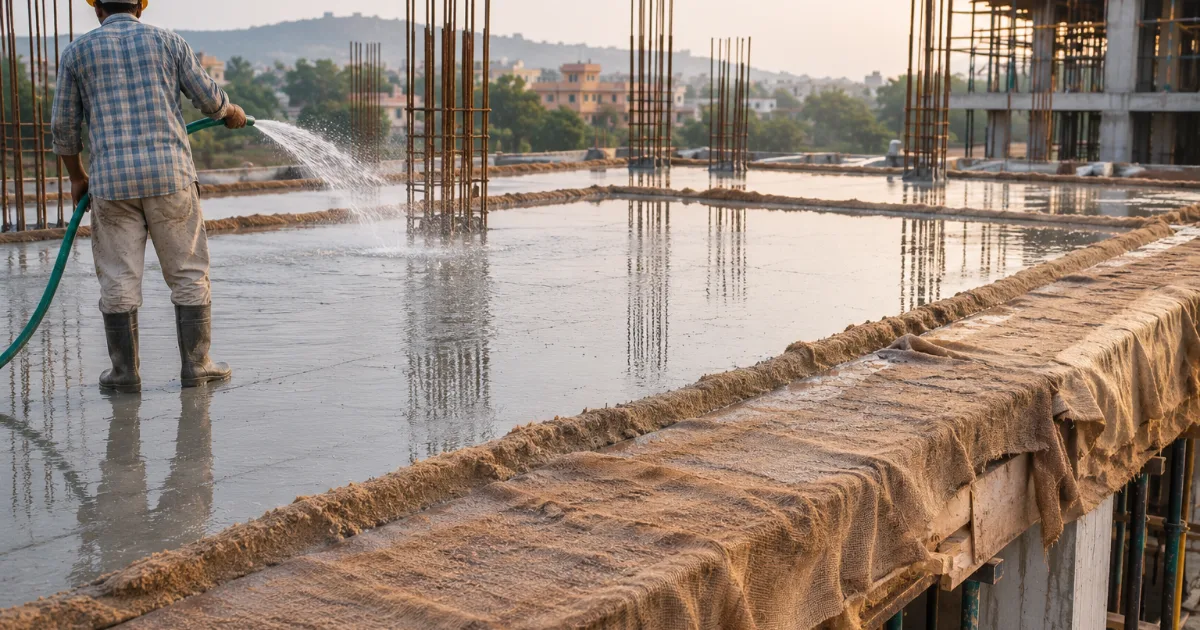
Concrete does not gain strength by drying; it gains strength through hydration, a chemical reaction that needs water. Curing is the process of keeping fresh concrete moist and at a suitable temperature long enough for that reaction to continue. Poor curing is one of the most common causes of surface cracks, dusting and lower strength in RCC slabs, beams and columns. In Rajasthan, where summers are hot, dry and windy, curing needs extra attention. This guide covers the main concrete curing methods, when to use each and how to supervise curing on site.

Why Concrete Curing Matters for RCC Structures
When concrete loses moisture too early, the surface layer cannot hydrate fully. The result can be plastic shrinkage cracks, a weak dusty surface and reduced durability, because the cover concrete that protects reinforcement becomes more porous. Good curing improves strength, abrasion resistance and resistance to water and chemical attack.
Curing is part of a wider quality system that starts with materials and mixing. Our concrete quality control checklist for construction sites covers the steps before and during placement.
Water Curing Methods: Ponding, Spraying and Wet Coverings
Water-based methods keep the surface continuously wet and are widely used on Indian sites.
- Ponding: small bunds of mortar or clay are made on slabs and filled with water. It works well for flat slabs and floors.
- Sprinkling or fogging: regular spraying keeps surfaces wet. It needs discipline, because surfaces that dry between rounds can crack.
- Wet coverings: hessian, jute bags or curing blankets are kept soaked and wrapped on columns, beams and walls.
- Plastic sheeting: polyethylene sheets over wet concrete reduce evaporation, especially useful in windy conditions.
The key rule is continuity. Alternate wetting and drying is worse than consistent moisture, so assign clear responsibility for curing rounds, including weekends and holidays.
Membrane Curing and Curing Compounds
Where water is scarce or surfaces are hard to keep wet, such as tall columns, vertical walls or road pavements, liquid membrane-forming curing compounds are sprayed on the fresh surface. They form a film that reduces moisture loss.
Apply the compound as soon as surface bleed water disappears, at the coverage the manufacturer specifies, and in an even coat. Check compatibility if the surface will later receive plaster, tiles or waterproofing, as some compounds may need removal first.
How Long to Cure Concrete
The commonly followed practice in India, in line with the Indian standard for plain and reinforced concrete, is a minimum of about 7 days of moist curing for concrete made with ordinary Portland cement, and longer, typically around 10 days or more, for blended cements such as PPC or when the weather is hot and dry. Your project specification and structural engineer may set different durations, so follow the approved specification.
Start curing as soon as the surface is firm enough not to be damaged, usually after initial setting. Formwork left in place helps retain moisture, but exposed faces still need curing.
Concrete Curing in Rajasthan’s Hot and Dry Weather
High temperatures, low humidity and wind speed up evaporation sharply. Practical steps include:
- Schedule large pours for early morning or evening
- Use windbreaks and shade nets on exposed decks
- Keep aggregates shaded and use cool mixing water where possible
- Cover fresh surfaces quickly with wet hessian or sheets
- Increase the frequency of curing rounds in peak summer
Water supply needs planning too. Reliable delivery of tankers and materials through road transportation services can keep curing on schedule at remote sites.
Supervising and Recording Curing on Site
Curing often fails not for lack of knowledge but for lack of follow-up. Keep a simple curing register for each pour, recording date, element, method, start time and daily checks. Assign named workers per shift, and track their attendance with a tool such as HRMS attendance and workforce features so curing duties are never left unassigned.
Over time, pour and curing records can be analysed alongside cube test results with construction data analytics to spot patterns. ATTPL Infra can help plan curing methods, equipment and site supervision as part of construction execution. See our machinery and equipment.
Need support with RCC construction quality on your next project? Contact ATTPL Infra to discuss your requirements.
Key takeaway: Start curing early, keep concrete continuously moist for the specified duration and take extra precautions in hot, dry Rajasthan weather; consistent supervision matters as much as the method.
Frequently Asked Questions
Can concrete be cured too much?
Extended moist curing does not harm concrete. The real risk is stopping too early or letting surfaces dry between curing rounds.
Is a curing compound as good as water curing?
Properly applied compounds are effective where water curing is impractical, but coverage and timing must follow the manufacturer’s guidance.
When should curing start on a slab?
Once the surface is firm enough not to be marked, usually after initial setting and once bleed water has disappeared.



Pingback: Retaining Wall Types and Design Guide | ATTPL Infra