Potholes are among the most visible signs of road distress and a serious safety risk for two-wheelers and cars. Quick fixes that simply throw material into a hole often fail within weeks, especially during the monsoon. Proper pothole repair, combined with drainage improvement and preventive maintenance, makes roads last longer and reduces repeated spending.
1. Why potholes form
- Water entering cracks and weakening the base layers.
- Poor drainage and water stagnation on or beside the road.
- Heavy and overloaded vehicles.
- Inadequate compaction or thin bituminous layers during construction.
- Ageing of bitumen that becomes brittle and cracks.
Our guide to the bituminous road construction process explains how good construction reduces such failures.
2. Repair methods
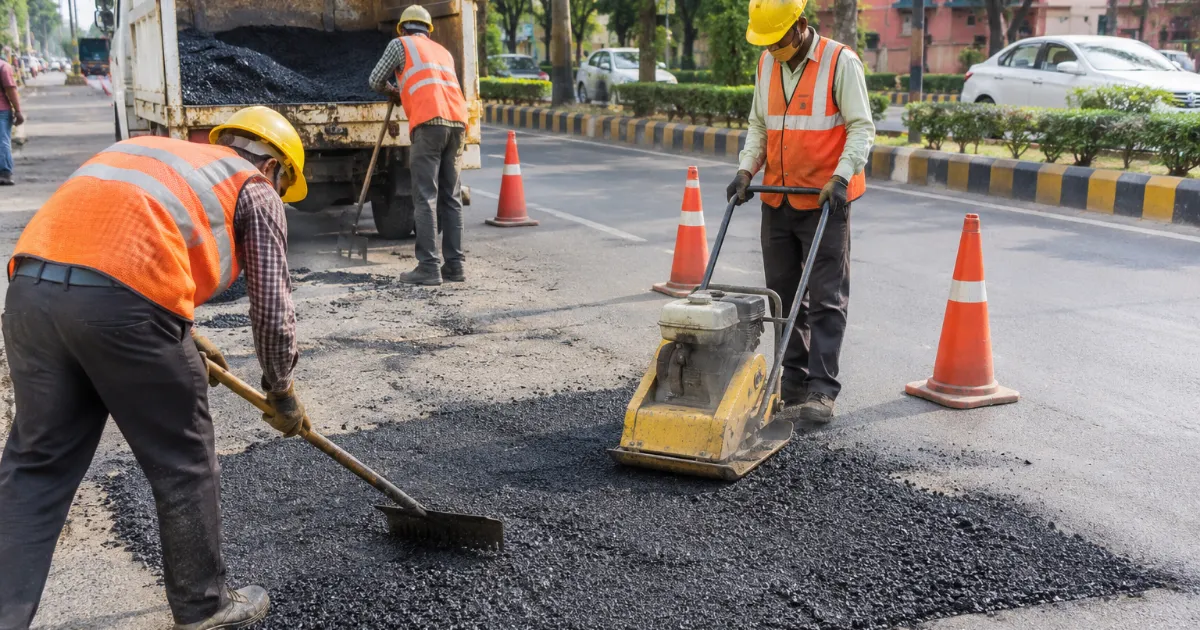
Temporary repairs with cold mix material can be useful during rains or emergencies. Permanent repairs usually use hot mix asphalt with the cut-and-patch method, which removes damaged material and rebuilds the area to proper depth and compaction. Concrete roads need different repair techniques, such as partial or full-depth concrete repair; see rigid vs flexible pavement.
3. The cut-and-patch method
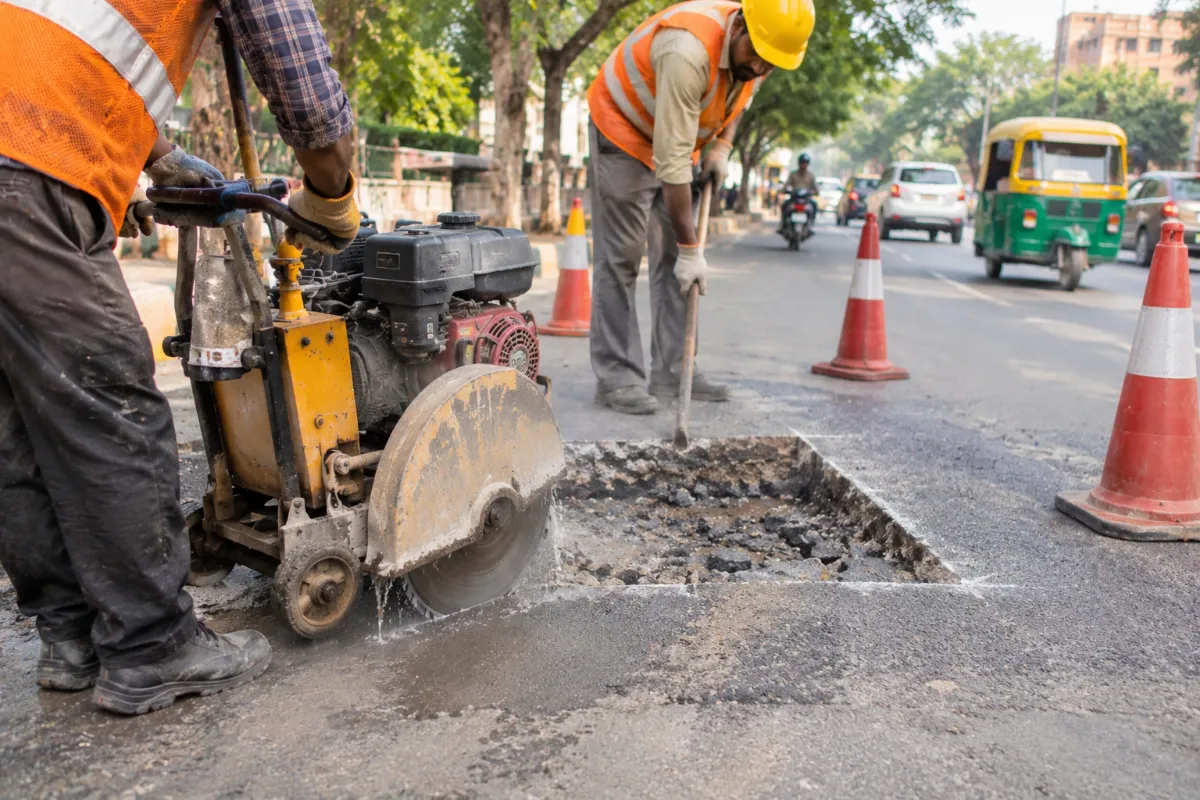
- Mark a rectangular area around the pothole, extending into sound pavement.
- Cut vertical edges and remove loose and damaged material.
- Repair the base if it is weak.
- Clean and apply a tack coat to the edges and bottom.
- Fill with hot mix in layers and compact each layer well.
- Finish level with the surrounding surface.
4. Fix the drainage
Potholes often return because water is not draining away. Clear side drains, restore cambers and repair culverts so that water leaves the road surface quickly. Our road drainage and culverts guide covers the design basics. Without drainage improvements, even good patches fail.
5. Preventive maintenance
Crack sealing, surface dressing and periodic renewal coats protect roads before potholes form. Regular inspections — ideally before and after the monsoon — allow early action. A maintenance plan with budgets and priorities is far cheaper than repeated emergency patching.
6. Planning a maintenance programme
Road owners — municipalities, panchayats, industrial parks and private campuses — benefit from a simple maintenance programme. Divide the road network into sections, inspect each section at fixed intervals and record defects such as cracks, potholes, edge breaks and drainage problems. Prioritise repairs by safety risk and traffic. Allocate an annual maintenance budget instead of waiting for roads to fail completely, because reconstruction costs many times more than timely maintenance.
- Inspect before and after the monsoon.
- Seal cracks within weeks of appearing.
- Keep a repair log with photographs.
7. Working with contractors on repairs
When repairs are outsourced, specify the method, materials, minimum thickness and compaction requirements in the work order. Pay against measured, inspected work rather than lump sums. Include a short defect liability period so that failed patches are redone at the contractor’s cost. Clear specifications protect public money and road users.
8. Quality and safety during repair
- Use proper traffic management and signage at work sites.
- Check material temperature and compaction for hot mix.
- Avoid patching during heavy rain with hot mix.
- Record repairs with photographs and locations.
Quality control principles from our quality control checklist apply equally to maintenance work. Panchayats and local bodies monitoring works can find guidance from ATTPL EMS.
Frequently asked questions
Why do pothole repairs fail quickly?
Common reasons are poor preparation, lack of compaction, patching in wet conditions and unresolved drainage problems.
Is cold mix a permanent repair?
Cold mix is mainly useful for temporary or emergency repairs; hot mix with proper cut-and-patch is preferred for durable repairs.
How can potholes be prevented?
Good drainage, crack sealing, timely surface renewal and control of overloading reduce pothole formation.
How long should a properly repaired pothole last?
A pothole repaired with correct preparation, material and compaction, and with drainage fixed, should last much longer than a quick fill.
Sources
Need road construction or maintenance support? Contact ATTPL Infra.