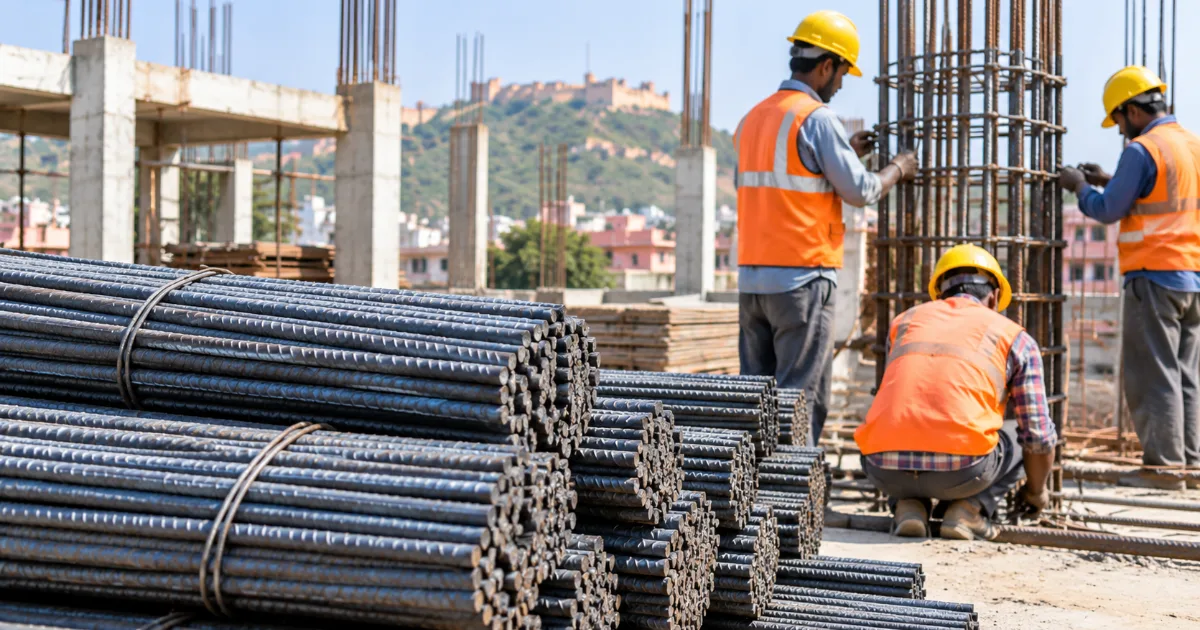
Reinforcement steel is the backbone of every concrete structure. Thermo-mechanically treated (TMT) bars combine a tough outer layer with a ductile core, giving strength and flexibility. But not all bars are equal, and poor steel or poor handling can weaken a building for its entire life.
1. Understand the grades
In India, high-strength deformed bars are covered by IS 1786. Common grades include Fe 415, Fe 500, Fe 550 and Fe 600, where the number indicates minimum yield strength in N/mm². The “D” variants such as Fe 500D and Fe 550D have tighter limits on chemistry and higher ductility, which is valuable in earthquake-prone areas. Always use the grade specified by your structural designer.
2. Insist on certified steel
- Buy BIS-certified bars carrying the standard mark and manufacturer identification.
- Ask for the mill test certificate for each lot, showing chemical and mechanical properties.
- Prefer authorised dealers and keep invoices for traceability.
3. Simple on-site checks
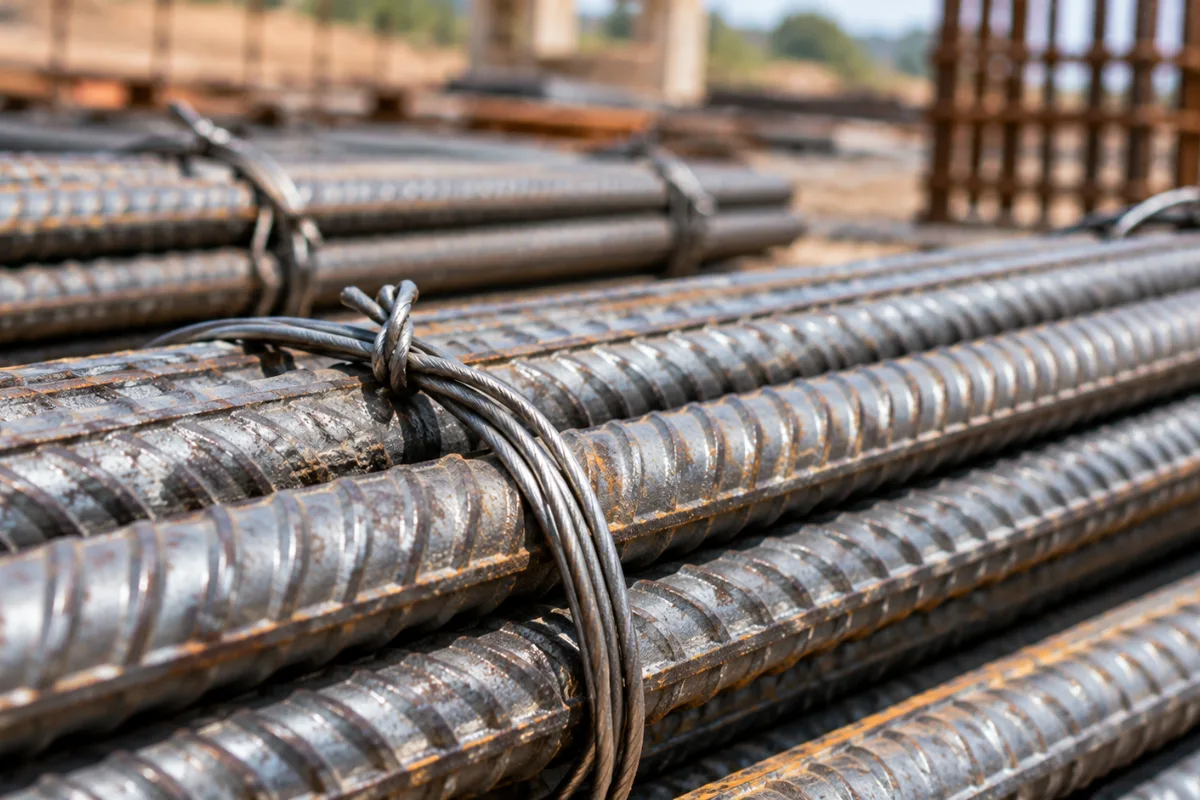
- Check rolled markings, diameter and rib pattern.
- Weigh sample lengths against standard unit weights to catch under-weight bars.
- For large projects, send samples to an accredited laboratory for tensile and bend tests.
4. Storage and handling
Store bars off the ground on wooden sleepers, under cover, and separated by diameter and grade. Avoid prolonged exposure to moisture and mud. Light surface rust is normal, but flaky rust and pitting are not acceptable. Do not heat or bend bars beyond specified radii.
5. Common mistakes
- Substituting grades or diameters without designer approval.
- Inadequate concrete cover, which exposes steel to corrosion.
- Poor lap lengths and missing stirrups at critical locations.
Good steel needs good concrete; read about precast vs cast-in-situ concrete and soil testing. Material procurement tips are in our construction material procurement guide, and you can contact ATTPL for project support.
Frequently asked questions
What does D mean in Fe 500D?
It indicates a higher-ductility variant with tighter chemical limits, preferred for earthquake resistance.
Which TMT grade is best for a house?
Use the grade your structural engineer specifies; Fe 500 or Fe 500D is common for residential work.
Is rusted TMT steel safe to use?
Light surface rust is generally acceptable, but flaky rust or pitting is not. Store bars properly to avoid it.
This article is general technical information. Every structure is different; consult a qualified structural engineer before taking decisions.
Related reading: Steel and cement work together. See our guide to cement types: OPC, PPC and PSC.