
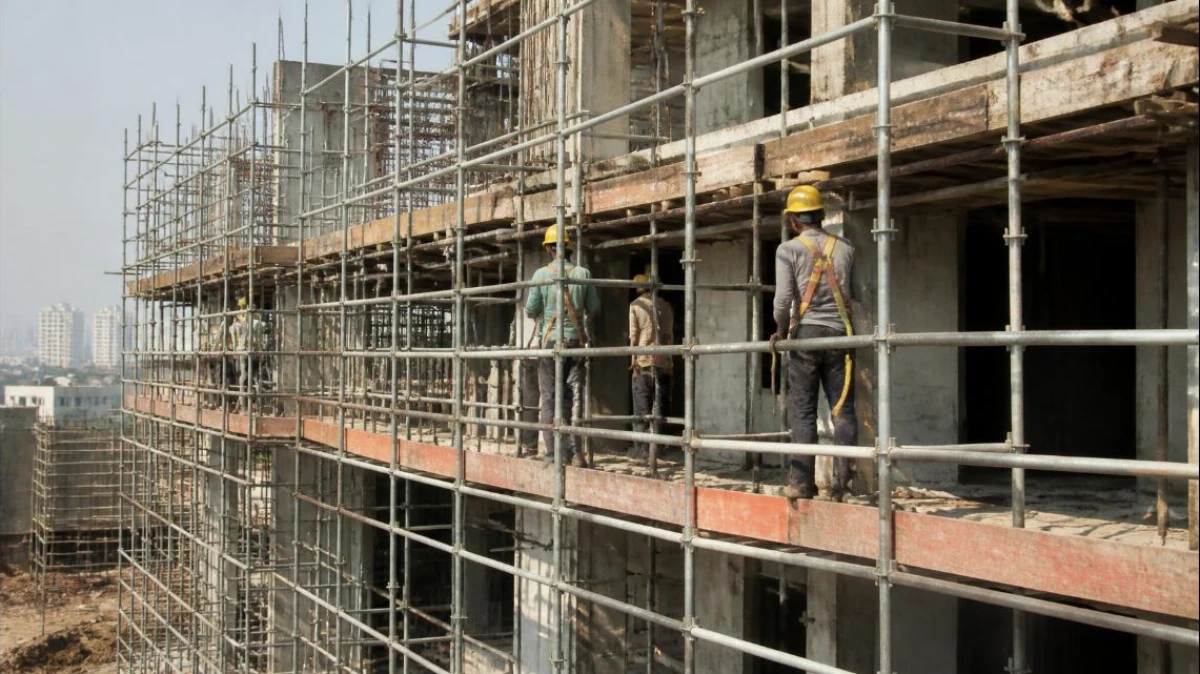
Falls from height are among the most serious risks on any construction site. Scaffolding gives workers a safe platform for masonry, plaster, painting and facade work, but only when it is the right type, erected by trained people and inspected regularly.
1. Common types of scaffolding
- Tube and coupler: steel tubes joined with clamps. Very flexible for irregular buildings, but slower to erect and needs skilled fitters.
- Cup-lock (system) scaffolding: vertical standards with cups at fixed intervals that lock the ledgers. Faster to erect and widely used for slab support and facades.
- Frame (H-frame) scaffolding: pre-made frames with cross braces, suited to low-rise and interior work.
- Mobile tower scaffolds: on lockable castors, for short-duration work on level floors.
- Cantilever and suspended platforms: for tall buildings where ground support is not possible; these need specific design and certified equipment.
2. Standards and rules to know
In India, IS 3696 (Part 1) is the safety code for scaffolds and ladders, and the Building and Other Construction Workers (BOCW) Act, 1996 and its state rules place duties on employers for safe work at height. Follow the manufacturer’s load ratings for system scaffolding.
3. Before erection
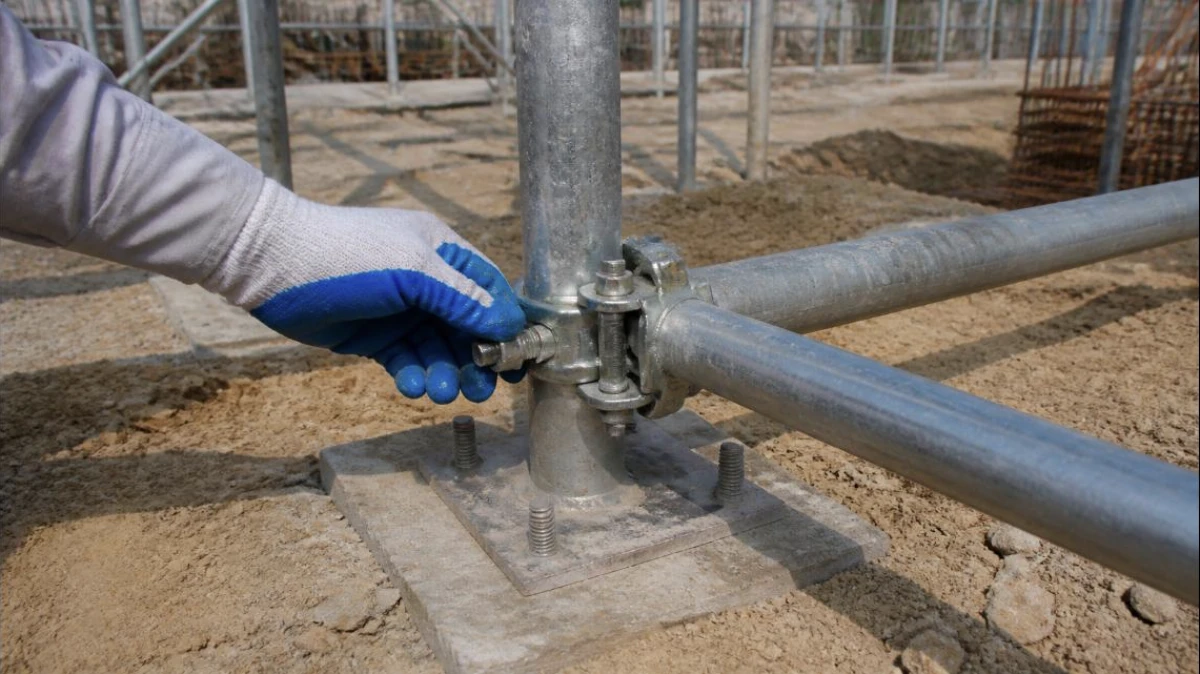
- Check the ground: firm, level, with base plates and sole boards. Never place standards on loose bricks.
- Plan ties to the building at regular intervals and bracing for stability.
- Use only undamaged tubes, couplers and boards; reject bent or corroded parts.
- Keep a safe distance from overhead power lines.
4. Daily inspection checklist
- Base plates and sole boards in place, no settlement.
- Standards vertical, ledgers and transoms secure, couplers tight.
- Fully boarded working platforms with no gaps or overhanging boards.
- Guard rails and toe boards on all open sides.
- Safe access by ladder or stair tower, ladders tied and extending above the landing.
- Ties and braces intact; nothing removed by other trades.
- No overloading with bricks, mortar or equipment.
- Inspection tag updated (green = safe, red = do not use).
Re-inspect after strong wind, heavy rain or any alteration. Scaffolding checks should be part of your overall construction site safety checklist.
5. Worker safety
- Helmets, safety shoes and full-body harnesses anchored to a safe point when working at height.
- Only trained workers erect, alter or dismantle scaffolding.
- Safety nets or debris netting where people work or pass below.
- Stop work at height in high winds or lightning.
Frequently asked questions
Which scaffolding is best for a G+4 building? Cup-lock or frame scaffolding is common for mid-rise work because it is quick to erect and stable when properly tied. The final choice depends on the facade, access and load.
How often should scaffolding be inspected? Before first use, at the start of every shift, and after weather events or alterations.
Can bamboo scaffolding be used? It is still seen on small jobs, but steel systems are easier to inspect and give more predictable strength.
For larger structures also read our guides on precast vs cast-in-situ concrete and structural audits of older buildings.
Talk to ATTPL Infra
ATTPL Infra supports builders, institutions and businesses in Rajasthan with planning, execution and site supervision. Call our toll-free number 1800 890 0815 or visit infra.attplai.com to discuss your project.