
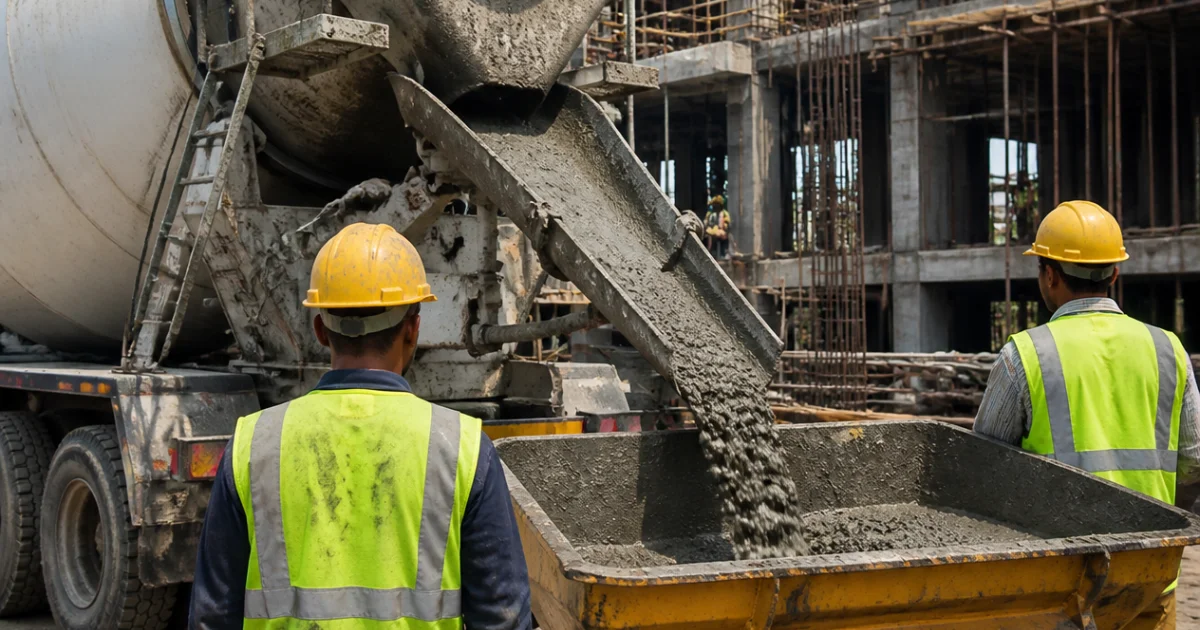
Concrete can be mixed on site with a mixer or delivered ready-mixed from a batching plant in transit mixer trucks. Both can produce good concrete, but they suit different projects. Choosing the right method affects quality, speed and wastage.
1. How each method works
Site mixing uses cement bags, sand, aggregate and water measured at site, often by volume. Ready-mix concrete is batched by weight at a plant to a specified grade and delivered in a transit mixer, then placed by chute or pump.
2. Quality and consistency
Batching plants control water-cement ratio, admixtures and aggregate grading more precisely, which gives more consistent strength. Site mixing depends heavily on supervision. Whichever you choose, test cubes and slump checks are essential, as described in the concrete quality control checklist.
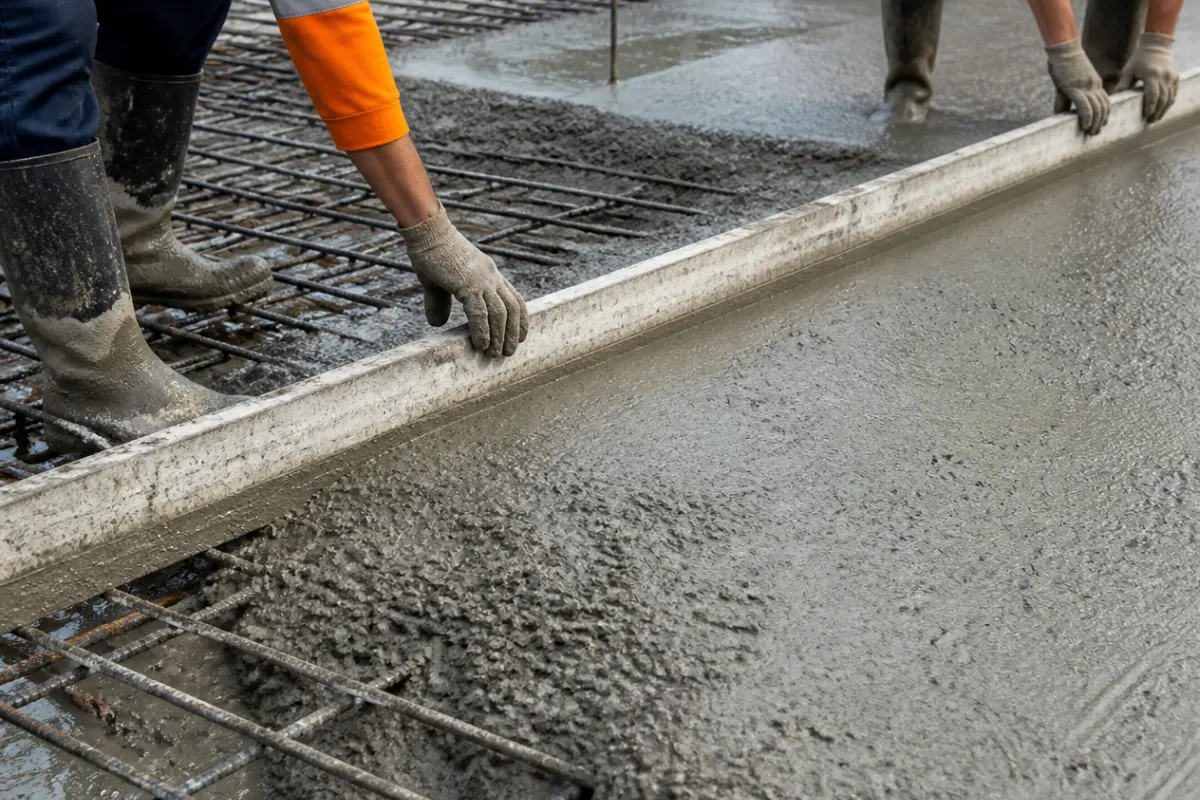
3. When RMC makes sense
- Large pours such as slabs, rafts and columns in one go
- Congested urban sites with no space to store materials
- Projects needing higher grades or special admixtures
- Tight schedules where pumping saves time
4. When site mixing may suit
- Small quantities and repair work
- Remote sites far from batching plants
- Pours that cannot be scheduled with truck arrival times
5. Planning a ready-mix pour
A ready-mix pour goes smoothly when everything is ready before the first truck arrives.
- Check formwork, reinforcement, cover blocks and embedded items in advance
- Confirm the pump location, pipeline route and truck access
- Agree the delivery schedule and gap between trucks with the supplier
- Arrange enough workers, vibrators and a backup vibrator
- Keep cube moulds, slump cone and record sheets at site
- Plan construction joints in case the pour has to stop
- Arrange curing materials before the pour ends
Never add water at site to make concrete flow more easily unless the supplier and engineer approve it, because extra water reduces strength.
6. Ordering and receiving RMC
Specify grade, slump, maximum aggregate size and quantity with some margin. Plan access for trucks and pumps, check the delivery ticket against the order and do slump tests on arrival. After placing, follow proper curing methods. Reinforcement quality matters equally; see our TMT steel guide. ATTPL Material Infra supplies construction materials for projects. For a discussion about your requirement, contact ATTPL HOLDCO or call toll-free 1800-890-0815.
Frequently asked questions
Is ready-mix concrete stronger?
Not automatically, but batching control makes it easier to achieve the specified grade consistently.
How long can RMC stay in the truck?
Concrete should be placed within the time limit given by the supplier and standards, which depends on the mix and temperature.
Should cube tests be done for RMC?
Yes. Take cubes at site and test them, regardless of the supplier.
Sources
This article is general information, not professional advice. Rules, rates and schemes change; please check the official sources and consult a qualified professional.