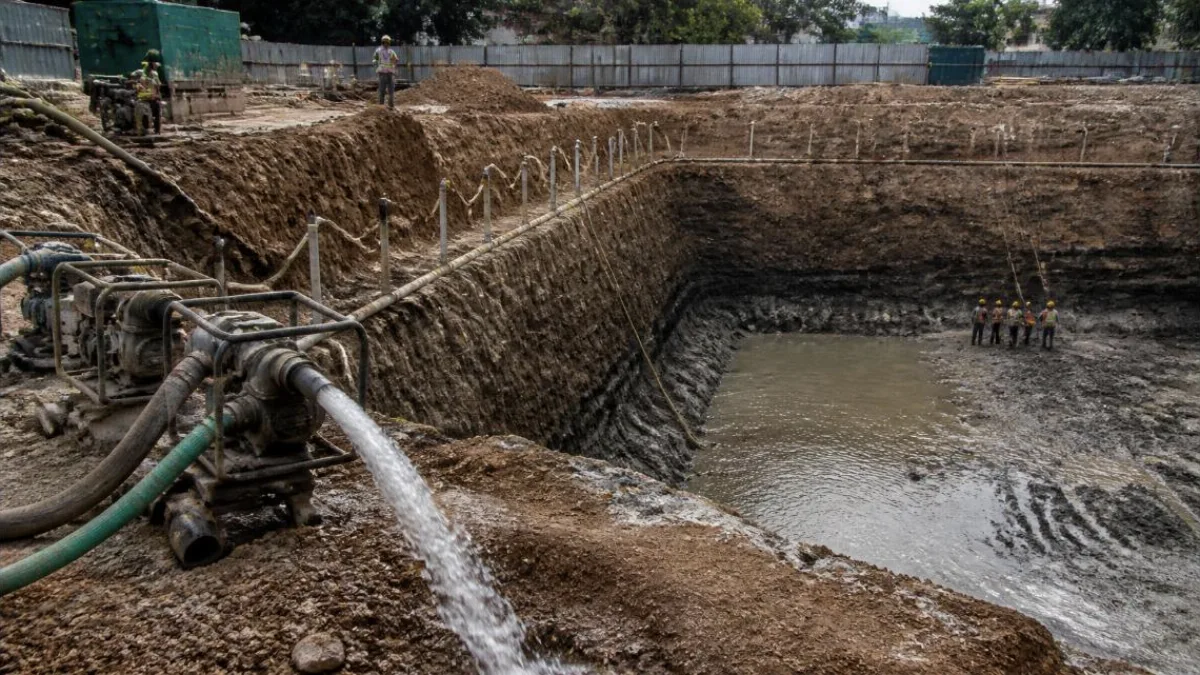
Basements, deep foundations, sumps and pipelines often go below the groundwater level, especially near lakes, rivers or in the monsoon. Water in the excavation softens the soil, makes concreting difficult and can cause slopes or nearby structures to move. Dewatering is the planned lowering or removal of this water so that work can be done safely in dry conditions.
1. Start with soil and water data
A geotechnical investigation tells you the soil layers, their permeability and the groundwater level in different seasons. These decide the method, the number of pumps and how long dewatering will run. Without this data, sites either under-design and flood, or over-pump and waste money.
2. Common dewatering methods
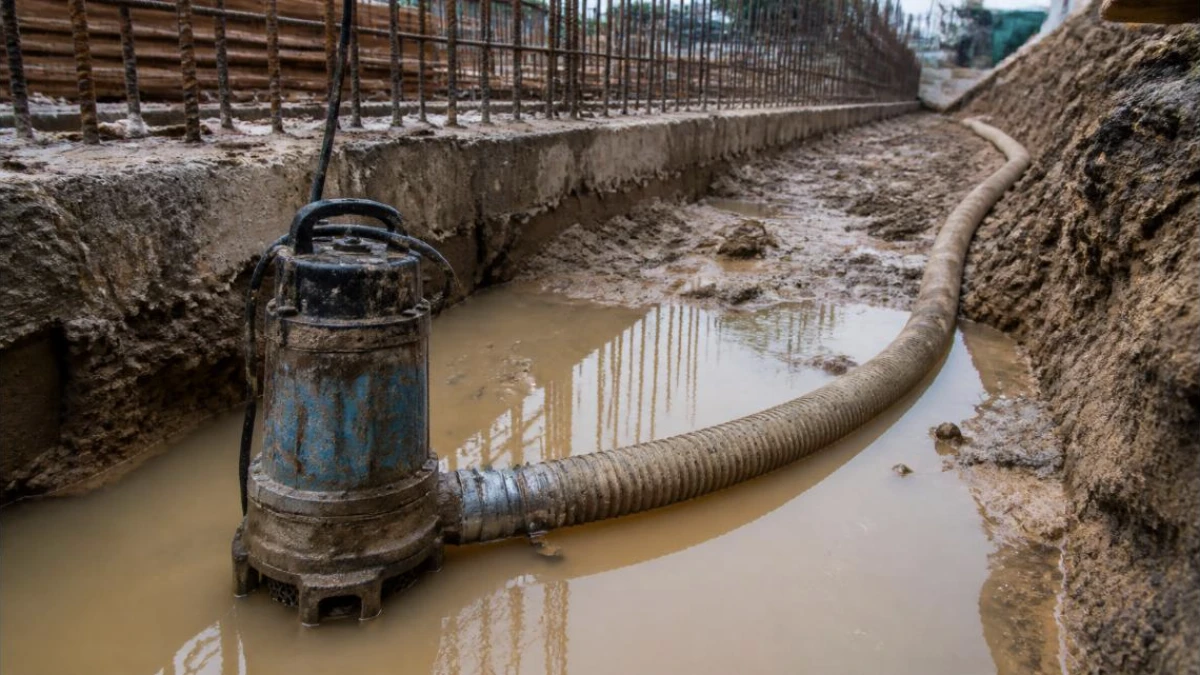
- Open sump pumping: water is collected in a sump at the bottom corner of the pit and pumped out. Simple and cheap for shallow digs in stiff soils, but it can carry fine soil with the water and loosen the base.
- Wellpoint system: a line of small-diameter pipes is driven around the excavation and connected to a header and vacuum pump. It suits sandy soils and depths of a few metres per stage.
- Deep wells: bored wells with submersible pumps lower the water table over a wide area for deep basements in permeable ground.
- Ejector wells: used in finer soils where normal wellpoints struggle.
- Cut-off methods: sheet piles, secant piles or diaphragm walls reduce the water entering the pit, so less pumping is needed.
3. Planning and approvals
- Estimate the inflow and keep standby pumps and power (a DG set) so pumping does not stop at night.
- Plan where the water goes. Settle silt before discharge and never flood neighbours or roads. Clean water may be reused for curing or dust control.
- Check whether a permission or NOC is needed from the groundwater authority or local body for your location and volume.
- Monitor nearby buildings, boundary walls and roads for settlement, especially in old areas.
4. Safety on site
- Support or slope excavation sides as per design; never let workers enter an unsupported deep trench.
- Keep electrical cables and pumps earthed and protected by RCCB/ELCB.
- Barricade the pit and keep spoil away from the edge.
- Stop dewatering only after the structure has enough weight or anchors to resist uplift, as decided by the designer.
Dewatering is part of the larger plan for foundation work and should follow the site safety checklist every day.
Frequently asked questions
How long does dewatering run? Usually until the basement or foundation is built up and backfilled enough to resist water pressure. Your structural designer should confirm the stage.
Can dewatering damage nearby buildings? Yes, if fine soil is pumped out or the water table drops too much. Proper filters, monitoring and cut-off walls reduce this risk.
Talk to ATTPL Infra
ATTPL Infra supports builders, institutions and businesses in Rajasthan with planning, execution and site supervision. Call our toll-free number 1800 890 0815 or visit infra.attplai.com to discuss your project.